Bank Reconciliation
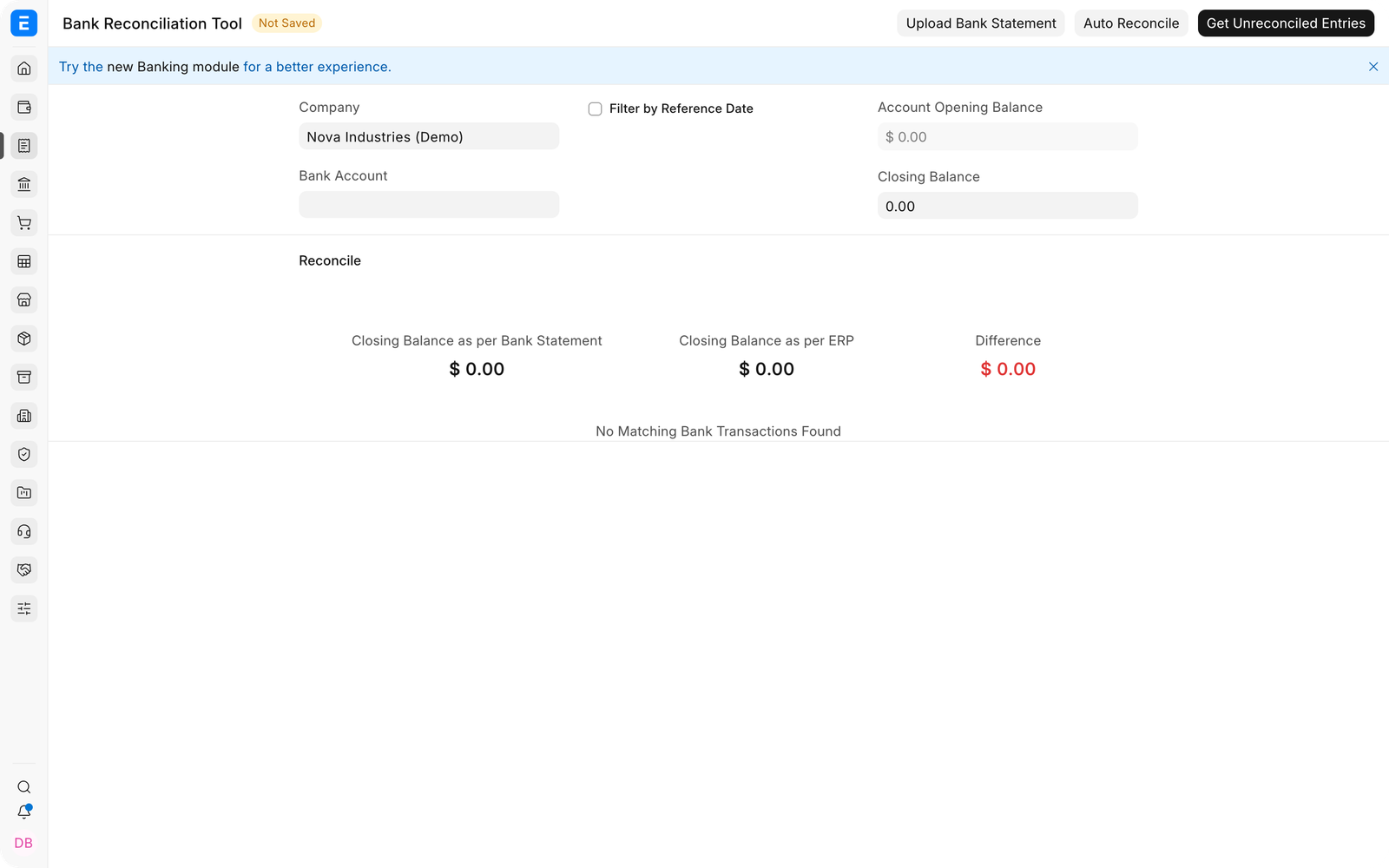
Bank Reconciliation compares the bank statement with entries in EnigmaERP. Match existing vouchers first, create missing accounting entries only when necessary, and finish by explaining every difference between the statement and ledger balances.
Before you begin#
Confirm the correct Company, currency, receivable or payable account, and bank or cash ledger. Use submitted source documents and keep the bank reference or remittance advice available.
Use Bank Reconciliation#
- Select the Company Bank Account and statement date range.
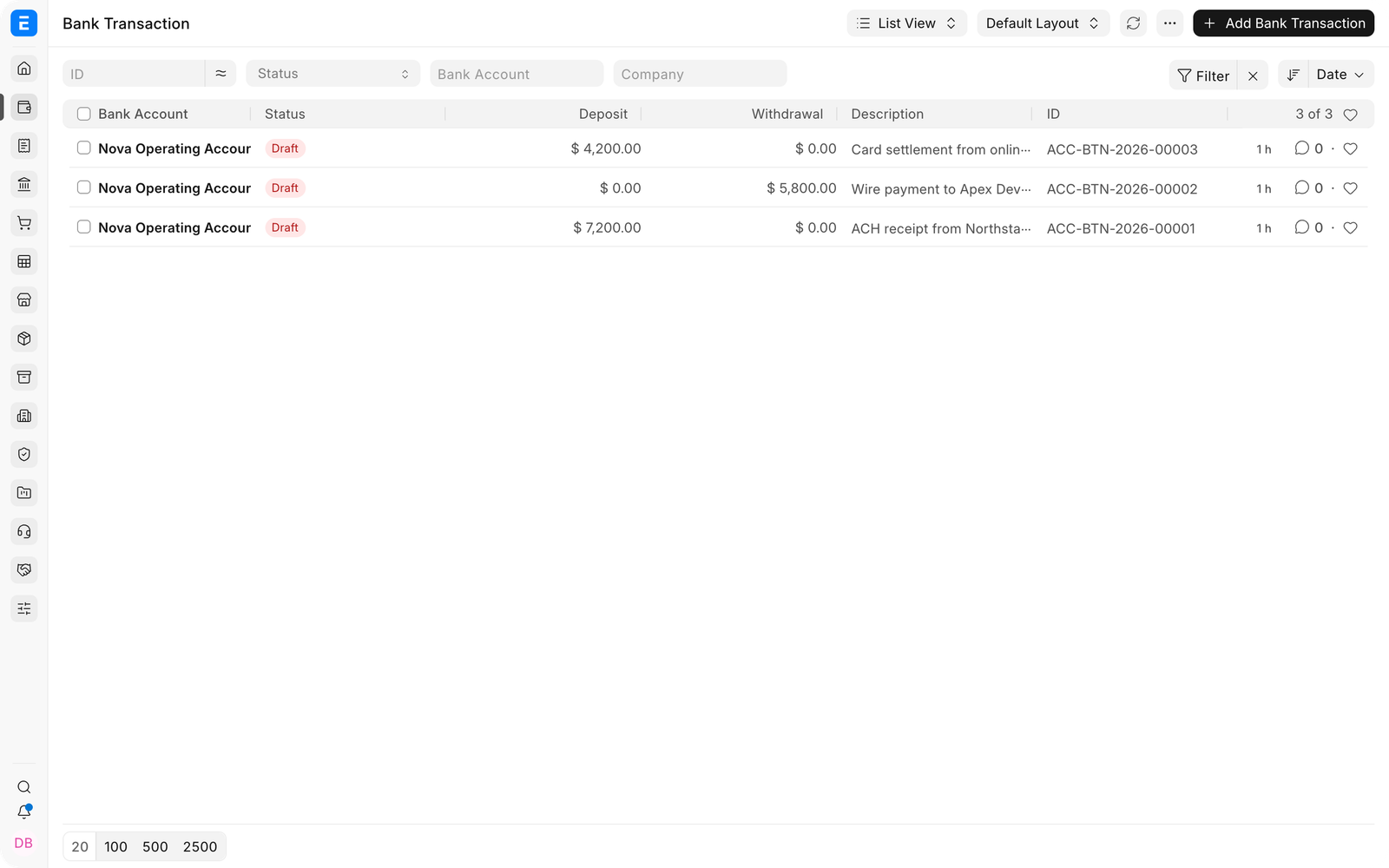
- Import or synchronize Bank Transactions.
- Match each statement line with the correct Payment Entry, Journal Entry, or other supported voucher.
- Create a missing voucher only after checking that it does not already exist.
- Record bank fees, interest, and timing differences explicitly.
- Confirm that the closing balance agrees with the bank statement.
Important fields and what they mean#
| Field | What it controls |
|---|---|
| Bank Account | Company account being reconciled. |
| Bank Statement Closing Balance | Closing balance from the source statement. |
| Bank Transactions | Imported statement lines. |
| Vouchers | Accounting entries available for matching. |
| Unreconciled Amount | Difference still requiring action. |
| Clearance Date | Date on which a voucher cleared the bank. |
What happens after you submit or process#
EnigmaERP updates the relevant accounting records and, where applicable, the outstanding or unallocated amounts. Review the General Ledger, party ledger, and source document status before treating the workflow as complete. A saved draft does not affect the ledger.
Troubleshooting#
A Payment Entry does not appear for reconciliation#
Check that it posts to the selected bank account, falls within the date range, is submitted, and has not already been cleared. Also review the banking settings and the Payment Entry's Paid From and Paid To accounts.
The bank statement balance does not match EnigmaERP#
Confirm the statement opening and closing dates, opening balance, uncleared cheques, bank fees, interest, transfers, and duplicate imports. Do not force the difference into the reconciliation date without identifying it.
An imported Bank Transaction has no suggested match#
Verify the amount, date, currency, reference number, and bank account. Expand the matching date range when settlement dates differ, then select the correct voucher manually if necessary.
The clearance date changed, but the General Ledger posting date did not#
This is expected. Reconciliation records when the bank cleared the transaction; it does not move the original accounting posting date.
Frequently asked questions#
What is the difference between Payment Reconciliation and Bank Reconciliation?#
Payment Reconciliation links party payments to invoices. Bank Reconciliation matches accounting transactions to the bank statement and records clearance.
Should reconciliation be done daily or monthly?#
Use a frequency appropriate to transaction volume and control requirements. High-volume accounts often benefit from daily or weekly work, with a formal month-end completion.
Can one bank transaction be matched to several Payment Entries?#
Use the supported multi-allocation behavior when the bank combined several accounting payments into one statement line. The selected entries must explain the statement amount completely.
Should unmatched bank fees be entered during reconciliation?#
Create the appropriate accounting transaction for the fee, using the bank charges account, and then reconcile it. Reconciliation should not replace the accounting entry.